A generator is the fastest way to fix the thing most likely to cut your trip short
Most boondocking trips do not end because of a broken part. They end because the battery bank ran low, the weather killed solar harvest for two days, or someone needed the air conditioner in heat and had no way to power it. A generator is the off-grid tool that answers all three: it puts watt-hours back on demand, regardless of cloud cover or time of day.
The mistake is treating the generator as either an embarrassment or a crutch. It is neither. It is a deficit-closing machine. The goal of this guide is to help you buy the right size, carry the right fuel, run it for the right reasons, and do it without creating a noise or carbon-monoxide problem for yourself or the camp next door.
Size to the loads you will actually run, not the biggest thing you own
Generator sizing goes wrong in two directions. People buy too small and the unit stalls or runs flat-out under load, or they buy too big and haul around extra weight, fuel burn, and noise they rarely use.
The honest way to size is to separate two different jobs:
- Battery charging. Here the limiter is usually your converter or inverter-charger, not the generator. A typical RV converter only pulls a few hundred watts to maybe 1,500 watts while charging, so a modest generator often recovers the bank just fine.
- Direct high-draw appliances. Air conditioners, microwaves, and electric kettles have large surge and running demands. These, not charging, are what force people into larger generators.
Generator sizing lanes for boondocking
Treat these as starting lanes, not a spec sheet. Your real number depends on surge loads, altitude, temperature, and whether you run AC. Confirm it with the calculator before buying.
Charging + light loads
~1,000-1,200W
Recovers most battery banks through the converter and runs lights, fans, fridge controls, and device charging. Quietest, lightest, and the most fuel-frugal lane.
Charging + occasional high draw
~2,000-2,400W
Adds headroom for a microwave or coffee maker alongside charging. A common all-around inverter-generator size for couples who do not run AC off-grid.
One air conditioner
~3,000-3,500W
Covers the surge of a single 13,500-15,000 BTU AC plus some background load. Bigger, heavier, louder, and thirstier. Buy this lane only if AC off-grid is a real need.
Before you commit, run your actual appliance list through the generator size calculator. It accounts for the surge spikes that nameplate watts hide, which is exactly where undersized generators fail. If you are still deciding whether a generator belongs in your plan at all, the generator vs. solar guide frames that tradeoff before you spend money on either side.
Surge is the spec that gets ignored
Air conditioners and some motors briefly draw two to three times their running wattage at startup. A generator rated only for the running number can stall on the surge. Size to the starting load, not the steady one, and confirm the appliance's locked-rotor or startup figure before assuming it fits.
Fuel and runtime: plan for the deficit, not the dream
A generator is only as useful as the fuel you brought and the runtime that fuel buys. The three common fuel types each change how you carry and use it:
- Gasoline is the most common for portable inverter generators. It is easy to find and refill, but it goes stale, so rotate or stabilize it on longer trips.
- Propane runs cleaner, stores almost indefinitely, and often shares your RV's existing tanks, but it usually delivers slightly less power and shorter AC runtime than gasoline.
- Diesel mainly shows up in onboard RV generators that pull from the chassis tank, which is convenient but ties generator runtime to your driving fuel.
Runtime depends far more on how hard the generator works than on its tank size. A unit loaded lightly for battery charging can sip fuel for many hours; the same unit running an air conditioner near capacity may empty the tank in a fraction of that time. That is why a tank-size number on the box tells you very little on its own.
Decide the job, then estimate the fuel
Before a multi-day stay, estimate how many amp-hours you expect to replace on a bad-solar day and how many high-draw appliance hours you actually need. Feed that into the generator runtime calculator so you carry fuel for the runtime you need, not a vague "just in case" jug that never gets used.
When a generator beats solar, and when it does not
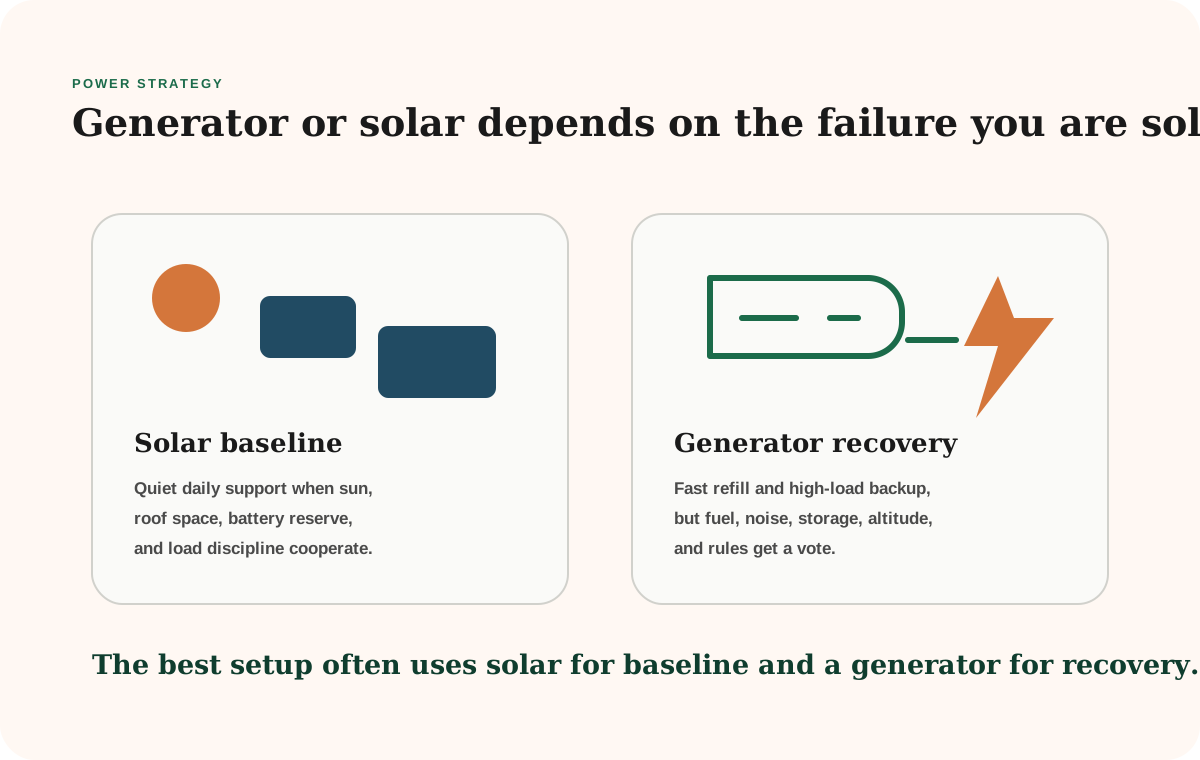
Solar and a generator are not rivals. They are good at opposite problems. Solar is quiet, free to run, and effortless once installed, but it is slow, weather-dependent, and useless after dark. A generator is loud and fuel-hungry, but it delivers a lot of energy fast, on demand, at midnight, in a storm.
Compare
When each tool wins off-grid
Use one comparison matrix to scan the practical differences. Small screens stack each row; wider screens keep the first column pinned.
| Situation | Usually the better tool | Why |
|---|---|---|
| Two cloudy days in a row | Generator | Solar harvest can collapse in bad weather. A short generator run replaces the deficit so the trip continues instead of ending early. |
| Long stay, mostly sunny, modest loads | Solar | Daily harvest keeps up with use, runs silently, and needs no fuel runs. The generator becomes a backup, not the plan. |
| Air conditioning in heat | Generator | AC is a heavy, sustained load. Few practical RV solar setups run it for long, so generator power (or a different campsite) is usually the realistic answer. |
| Deep timber or canyon shade | Generator | Shade can cut solar to a trickle for days. A generator does not care where you park. |
| Quiet-required area, light loads | Solar | Where noise rules are strict or camps are tight, silent harvest avoids conflict entirely for the loads it can cover. |
For most boondockers the honest answer is "both, in the right ratio." Solar carries the easy days; the generator covers the deficit on the hard ones. If you are choosing between an all-in-one solar generator (battery-plus-inverter unit) and a built-out roof system, the solar generator vs. RV solar system comparison breaks down which fits which use case.
Inverter generators: why "quiet" is doing real work
The phrase you want on the box is inverter generator. These produce clean, stable power that is safe for laptops, routers, and sensitive electronics, and they throttle the engine down to match the load instead of roaring at a fixed speed.
That throttling matters off-grid for three reasons:
- Noise. A load-following engine is dramatically quieter at light charging loads, which is most of what boondockers actually do.
- Fuel. Less engine speed under light load means less fuel burned and longer runtime per tank.
- Clean power. Stable output protects electronics and keeps the converter and any onboard chargers happy.
Conventional open-frame generators are cheaper and sometimes more powerful per dollar, but they run loud at a constant speed and produce dirtier power. For quiet public-land camping near other people, an inverter generator is almost always the right call. Do not chase a published decibel rating alone, though. Distance, terrain, and exhaust direction change the real-world experience more than a single lab number.
Generator-plus-solar hybrid charging: let each tool do its half
The strongest off-grid power plans run solar and generator together rather than picking one. A good hybrid rhythm looks like this:
- Let solar do the free work. On a normal day, the array refills the bank and you never touch the generator.
- Use the generator to close the gap, not fill the bank. When you do run it, target a bulk-charge window. Charging from a low bank up to roughly 80% is fast and efficient. The final top-off taper is slow, so that last stretch is usually a poor use of fuel and noise.
- Hand the finish to solar. Run the generator for the fast bulk recovery, shut it down, and let the array carry the slow absorption phase quietly through the rest of the day.
This pairing plays to both strengths: the generator's speed and the array's silence. It also keeps lithium and AGM banks healthier, because they spend less time sitting deeply discharged after bad weather. To see the full daily picture of which loads to shift toward charging windows and which to protect overnight, the boondocking power management guide walks through the routine that makes hybrid charging pay off.
Field note
Bulk window over full charge
The most efficient generator users rarely run the unit to 100%. They do a fast bulk pull while the engine is working efficiently, then stop and let solar finish. You save fuel, cut runtime, reduce noise, and your neighbors barely notice you ran at all.
Run-time discipline: decide the job before you pull the starter
Almost every generator complaint, whether yours about fuel or a neighbor's about noise, traces back to one habit: running without a defined stop point. A generator running because "we might as well top everything off" drifts through the afternoon. A generator running to put a known number of amp-hours back has an obvious moment to shut down.
Three habits prevent most of the trouble:
- Define the job first. Are you replacing a measured deficit, running one high-draw appliance, or recovering from bad weather? Name it before you start.
- Use a battery monitor as your timer. A proper monitor reading measured current, not just voltage, tells you when the useful part of the run is over. Without it, runtime stretches because nobody knows when to stop.
- Avoid the "just a little longer" trap. A run that was reasonable for 45 minutes becomes the reason everyone remembers the camp if it slides into hours.
If you find yourself needing the generator constantly, that is feedback, not failure. It usually points to undersized battery reserve, weak solar harvest, or heavy loads landing at the wrong time of day. The generator etiquette guide digs into the social side, and if the pattern looks like a hardware gap, the generator vs. solar guide helps separate a true shortage from a routine problem.
Public-land and courtesy rules: the quiet is part of why people came
Boondocking works because people use shared public space with restraint, and generators are the single most common source of friction. Quiet hours, where posted, are not suggestions; many land managers enforce them, and they exist precisely because dispersed camping draws people seeking quiet.
A few rules of thumb that travel well across most public land:
- Follow posted quiet hours exactly. When none are posted, treat early morning and evening as if they still belong to the whole area.
- Favor daytime runs. Mid-morning to mid-afternoon is when generator noise is most tolerated and, conveniently, when you can hand the finish to solar.
- Get stricter as camps get closer. Dispersed sites are often closer together than they looked online. Tighter spacing means shorter runs and more careful timing.
- Check fire restrictions. During high fire danger, generator and equipment-use rules can change. Confirm current local conditions before you rely on running one.
Land-manager policies vary by agency, district, and even individual campground, so verify specifics locally. The BLM, U.S. Forest Service, and your destination's own pages are the authoritative sources for quiet hours, dispersed-camping rules, stay limits, and fire status. A useful filter before any run: would this seem fair if I were the next camp over?
Safety first: carbon monoxide and placement are non-negotiable
A generator is a combustion engine, and its exhaust contains carbon monoxide, a colorless, odorless gas that has killed RVers who ran a generator carelessly. This is the part of generator use where there is no acceptable shortcut.
CO safety rules that do not bend
Never run a portable generator inside the RV, in a storage bay, under the rig, in a tent, or in any enclosed or partly enclosed space, even with a door or window cracked. Keep it well away from the RV with the exhaust pointed away from windows, vents, doors, and the awning area. Wind can push exhaust back toward you, so re-check placement if conditions change. Keep working CO alarms inside the RV and replace them on the manufacturer's schedule. Refer to CPSC carbon-monoxide guidance for current placement and distance recommendations.
A few more placement habits worth building in:
- Do not tuck it away to make it quieter. Hiding a generator under the rig or in a bay to muffle sound is exactly how exhaust pools into a hazard. Distance and direction beat any quieting trick.
- Mind the neighbors' exhaust path too. Point your exhaust away from the next camp's tents, open windows, and hangout space, not just your own.
- Let it cool before refueling. Spilled fuel on a hot engine is a fire risk. Shut down, let it cool, then refuel away from ignition sources.
- Store and carry fuel safely. Use approved containers, secure them for travel, and keep them away from heat and the living space.
A simple boondocking generator routine
Put the pieces together and the whole thing becomes a short, repeatable habit:
- Before the trip: size the unit to your real loads, confirm it with the generator size calculator, and carry fuel for the runtime you expect.
- On a normal day: let solar do the work and leave the generator off.
- On a bad-solar or high-load day: place it safely with exhaust pointed away, run a fast bulk-charge window during daytime hours, watch the battery monitor, and shut it down when the job is done.
- Always: keep CO alarms working, respect quiet hours, and stay stricter the closer your neighbors are.
Done this way, a generator stops being a guilty secret or a constant drone and becomes what it should be: the quiet insurance policy that keeps an off-grid trip going when nothing else can.
Frequently asked
Questions RVers usually ask next.
What size generator do I need for boondocking?
It depends on whether you only need to charge the battery bank or also run high-draw appliances. Charging through a typical RV converter often needs only about 1,000-1,200 watts, while running an air conditioner usually requires 3,000-3,500 watts to cover the startup surge. Run your actual appliance list through the generator size calculator to get a number that accounts for surge, not just running watts.
Is it better to use a generator or solar for off-grid power?
They solve opposite problems, so most boondockers use both. Solar is silent and free to run but slow and weather-dependent. A generator delivers a lot of energy fast and on demand, which makes it the better tool during cloudy stretches, deep shade, or air-conditioner loads. Let solar carry the easy days and use the generator to close the deficit on the hard ones.
How do I run a generator and solar together?
Let solar handle normal days, and when you do run the generator, target a fast bulk-charge window rather than a full charge. Charging from a low bank up to roughly 80% is efficient, so run the generator for that, shut it down, and let solar finish the slow absorption phase quietly. This saves fuel, cuts noise, and keeps the battery bank healthier.
How do I use a generator safely while boondocking?
Never run a portable generator inside the RV, in a storage bay, under the rig, or in any enclosed space, even with a window cracked, because the exhaust contains carbon monoxide. Place it well away from the RV with the exhaust pointed away from windows, vents, and doors, keep working CO alarms inside, let it cool before refueling, and store fuel in approved containers. Re-check placement if the wind shifts.
What are the courtesy rules for running a generator on public land?
Follow posted quiet hours exactly, favor mid-morning to mid-afternoon runs, keep sessions short and purposeful, and get stricter as nearby camps get closer. Policies vary by agency and campground, so confirm quiet hours, stay limits, and fire restrictions with the local BLM office, Forest Service district, or destination page before you rely on running one.
Freshness note
Last checked May 30, 2026
This topic can change when products, plans, prices, campsite rules, or fit guidance move. These notes show what was reviewed most recently.
This review included
- Reviewed generator sizing, fuel/runtime, and hybrid-charging guidance against current BLM, Forest Service, and CPSC carbon-monoxide context.
- Routed sizing and runtime math to the on-site generator calculators instead of stating fixed brand specs or prices.
Recent change log
May 30, 2026
Published boondocking-with-a-generator how-to with sizing, fuel/runtime, hybrid-charging, courtesy, and CO-safety guidance.
Broader editorial corrections are tracked on the Corrections and Updates page.