How do you stay safe from fire in an RV?
You stay safe from RV fire with four layers working together: prevent the common causes, keep working alarms, carry the right extinguishers in the right places, and have a practiced escape plan so everyone can get out fast. No single one of those is enough on its own, because an RV fire behaves differently from a house fire — the space is small, it is full of combustible materials and fuels, and there are only a couple of ways out, so a fire that starts small can fill the cabin with smoke and flame in moments. The goal is to stop fires before they start, catch them instantly if they do, and be ready to either knock down a tiny one or leave immediately.
That last point deserves emphasis up front: the U.S. Fire Administration and NFPA both teach that escape comes first, and an extinguisher is for a small, contained fire only. Many RV fires are preventable, and they trace back to the same handful of causes — electrical faults, propane, cooking, and overheated tires or brakes — so a little attention to each closes most of the risk. This guide is the fire half of RV safety; the propane-safety guide covers the gas and carbon-monoxide side, and the two together cover the hazards most likely to turn serious.
Why RVs catch fire — the common causes
Understanding where RV fires start tells you where to focus prevention. Electrical problems are a leading cause: overloaded circuits, corroded or loose connections, aging or damaged wiring, failing converters or chargers, and the heat they generate can ignite nearby materials, which is why you should never overload adapters or ignore a warm outlet or a burning smell. Propane is the next big one — leaks and appliance faults — and it gets its own full treatment in the propane-safety guide. Cooking fires are as common in an RV galley as in any kitchen, so never leave the stove unattended and keep flames away from curtains and towels.
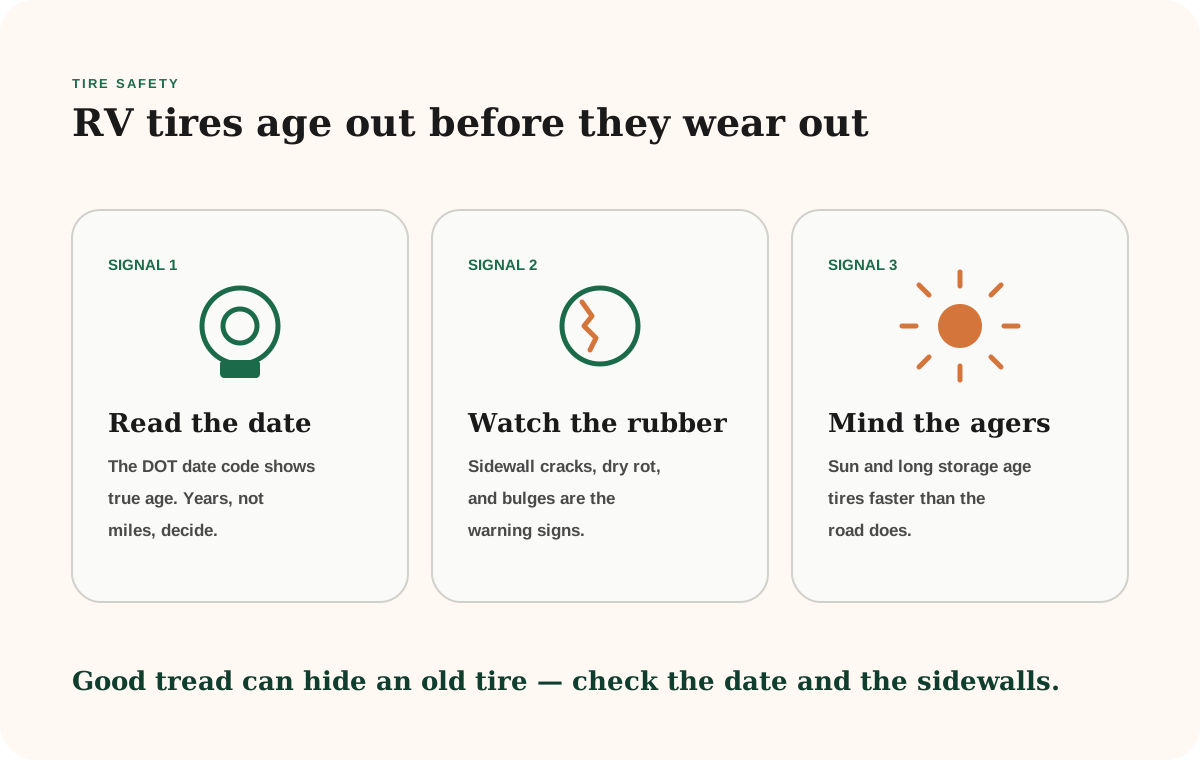
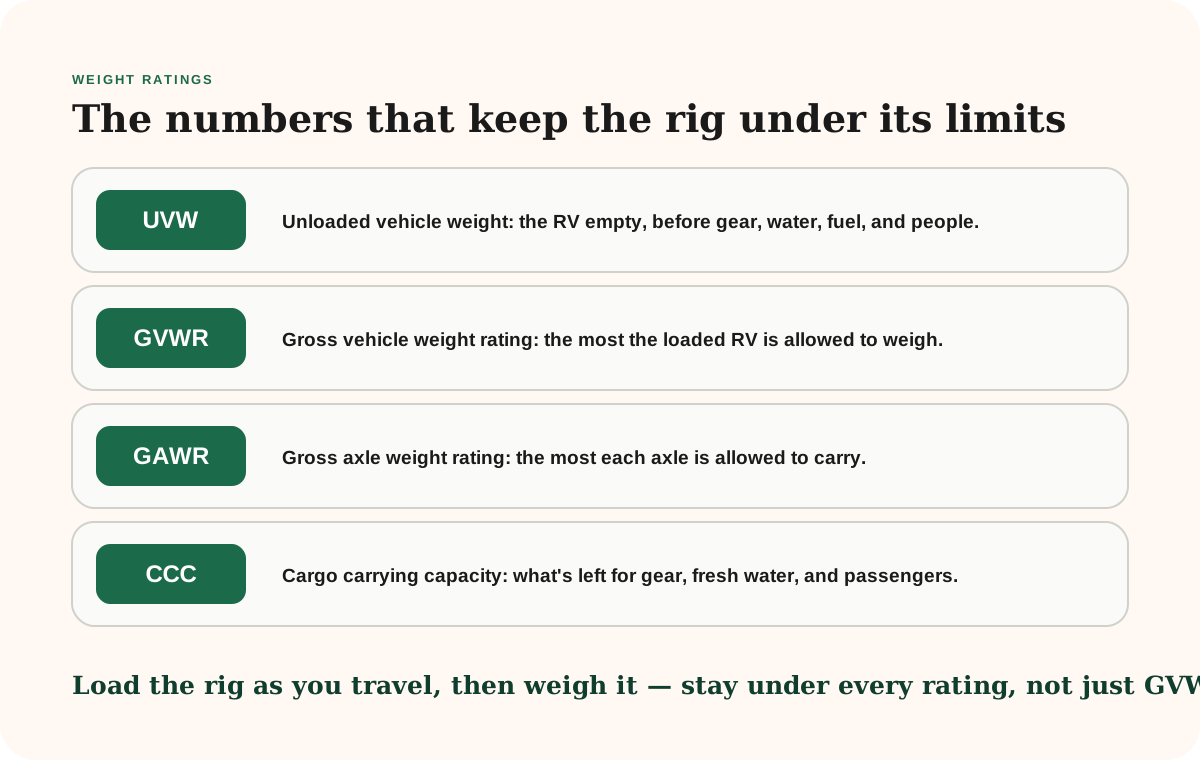
The vehicle side adds causes a house never has. Overheated tires and wheel bearings and dragging brakes can get hot enough to ignite, which ties directly to keeping tires properly inflated and aged-out tires replaced, as the tire guide covers, and to staying under your weight ratings so nothing runs hot. Refrigerators — particularly absorption models, some of which have been subject to recalls — and engines, exhaust, and generators round out the list. Addressing manufacturer recalls promptly, inspecting wiring and connections, and not towing on a low tire are quiet habits that prevent a frightening number of fires before they ever begin.
Choosing the right extinguisher
Your RV almost certainly came with a small fire extinguisher mounted near the door, and you should treat that as the bare minimum, not your fire plan. Extinguishers are rated by class for the kind of fire they fight: Class A is ordinary combustibles like wood, paper, and fabric; Class B is flammable liquids and gases like grease and propane; and Class C is energized electrical fires. A multipurpose ABC dry-chemical extinguisher handles all three, which makes it the most versatile and the right general choice for an RV, where you could face any of them. Many factory units are basic B:C only, meaning they are not rated for ordinary combustibles, so supplementing with ABC units is a real upgrade.
Quantity and size matter as much as type. One small extinguisher by the door cannot help you if the fire is between you and it, so carry several — a common, sensible setup is one near the entry, one in the bedroom, one in or near the galley (but not mounted right beside the stove, where a cooktop fire would block it), one in an exterior storage bay, and one in the tow vehicle. Choosing a somewhat larger unit than the minimum buys you more seconds of discharge, which is precious when a fire is growing. The aim is simple: from wherever you are in or around the rig, you can reach an appropriate extinguisher without reaching through flames.
Fire classes and extinguishers
Compare
Fire classes and what fights them — multipurpose ABC covers the first three
Use one comparison matrix to scan the practical differences. Small screens stack each row; wider screens keep the first column pinned.
| Spec | What burns | RV examples | Extinguisher |
|---|---|---|---|
| Class A | Wood, paper, fabric, trash | Bedding, curtains, paper, upholstery | A or ABC |
| Class B | Flammable liquids and gases | Grease, propane, fuel, solvents | B or ABC |
| Class C | Energized electrical | Wiring, converter, outlets, appliances | C or ABC |
| Multipurpose ABC | All of the above | The versatile RV choice | Carry several, maintained |
RV fire safety at a glance
The essentials of being ready without being reckless.
Right extinguisher
Multipurpose ABC
Covers ordinary, flammable-liquid, and electrical fires — carry more than one.
Factory unit
Bare minimum
Often a small B:C by the door — supplement with larger ABC units, distributed.
Technique
PASS
Pull, Aim at the base, Squeeze, Sweep — only on a small, contained fire.
Top priority
Two exits, get out
Know the door and the egress window; if it's spreading, evacuate and call 911.
Maintain them, and know how to use one
An extinguisher only helps if it works, so maintenance is part of fire safety, not an afterthought. Check each unit on a routine — monthly is the common advice — confirming the pressure gauge needle sits in the green, the pin and tamper seal are intact, the hose and nozzle are clear, and the body shows no corrosion or damage. Dry-chemical extinguishers can have their powder settle and pack over time, so giving them an occasional shake or inversion helps keep the agent loose. Extinguishers also have a service life and a date; replace or professionally service them on the manufacturer's schedule, and replace any that has been partially discharged, lost pressure, or aged out.
Knowing how to use one in the half-second you have matters too, and the standard technique is the acronym PASS: Pull the pin, Aim at the base of the fire (not the flames), Squeeze the handle, and Sweep side to side. But technique is only half of it — judgment is the other half. Only attempt to fight a fire that is small, contained, and not spreading, and only with a clear exit at your back so you are never trapped behind it. The moment a fire is growing, producing heavy smoke, or between you and the door, stop fighting it, get everyone out, and call 911. An extinguisher buys you a chance against a tiny fire; it is never worth your life against a real one.
Prevention and a two-exit escape plan
The cheapest fire safety is the fire that never starts and the alarm that catches the one that does. Keep a working smoke alarm, and pair it with the carbon-monoxide and propane detectors covered in the propane-safety guide, testing all of them on a routine and replacing them on schedule. Don't overload your electrical system or daisy-chain adapters, address any recall promptly, keep cooking attended, and fold a tire, wiring, and venting check into your pre-trip readiness routine. These small habits remove the fuel and the ignition sources that most RV fires depend on.
Then plan to get out, because in a fast-moving RV fire seconds decide everything. Know your two ways out — the main door and at least one egress window — and make sure everyone aboard, especially children, knows where the egress window is and how to operate its latch, which is worth physically practicing so it is muscle memory in the dark and smoke. Agree on a meeting spot a safe distance away, and make the rule explicit: at the first alarm or sign of fire, everyone goes out and gathers there, and someone calls 911 from outside. The U.S. Fire Administration's home-escape-plan guidance applies directly to an RV — the only differences are that the space is smaller and the time you have is shorter, which makes the practiced plan more important, not less.
A worked example: a galley grease fire
Picture a small grease fire flaring up on the cooktop while you are standing right there. It is small, contained to the pan, and the door is behind you — this is exactly the situation an extinguisher is for, though if a lid is within reach, smothering the pan is often even faster and cleaner. You grab the galley ABC extinguisher, stand back, and use PASS: pin out, aim at the base, squeeze, sweep, and the fire is out in a few seconds. Crucially, you never turned your back on your exit, and you were ready to abandon the effort and leave if it had not worked immediately.
Now change the outcome: the same fire catches a curtain and climbs the cabinet faster than you can react. The right move flips instantly — you stop, get everyone out the door or the egress window, gather at your meeting spot, and call 911, letting the rig burn rather than risking anyone for it. That single decision, fight-or-flee based on whether the fire is small and contained with an exit behind you, is the heart of RV fire safety. Prevention and alarms get you ready; the extinguishers handle the small stuff; and the escape plan handles the rest, which is the only outcome that truly matters.
The short version
RV fire safety rests on four layers: prevent the common causes (electrical faults, propane, cooking, and overheated tires or brakes), keep working smoke, CO, and propane alarms, carry several maintained multipurpose ABC extinguishers placed so you can always reach one without crossing flames, and practice a two-exit escape plan. Use the PASS technique on a small, contained fire only, with an exit at your back, and the instant a fire is spreading, get everyone out through the door or an egress window and call 911. The factory extinguisher is a starting point, not a plan — and no possession in the rig is worth a life.
How to set up RV fire safety
- Carry the right extinguishers. Add several maintained multipurpose ABC units beyond the factory one, in a useful size, and keep the receipts of their service dates.
- Place them well. Mount them distributed — near the door, the bedroom, the galley (not beside the stove), an exterior bay, and the tow vehicle — so one is always reachable.
- Maintain everything. Check gauges, pins, and seals monthly, shake dry-chemical units occasionally, and replace or service on schedule; test smoke, CO, and propane alarms.
- Prevent the causes. Don't overload circuits, keep cooking attended, address recalls, and inspect tires, bearings, wiring, and vents before trips.
- Plan and practice escape. Identify two exits including the egress window, teach everyone the latch, set a meeting spot, and rehearse getting out fast.
Get out first — fight only a small, contained fire
Only use an extinguisher on a small fire that is contained and not spreading, and only with a clear exit behind you. The moment a fire grows, produces heavy smoke, or blocks your path, stop, get everyone out through the door or an egress window, gather at your meeting spot, and call 911 from outside. Keep working smoke, carbon-monoxide, and propane alarms. This is general safety education, not a substitute for the fire department or professional inspection.
Official fire-safety references
Build your plan from these authorities, then practice it.
Frequently asked
Questions RVers usually ask next.
What kind of fire extinguisher do you need for an RV?
A multipurpose ABC dry-chemical extinguisher is the best general choice, because it fights ordinary combustibles (A), flammable liquids and gases (B), and energized electrical fires (C) — any of which can happen in an RV. The small factory unit is often B:C only, so adding ABC extinguishers is a meaningful upgrade.
How many fire extinguishers should an RV have?
More than the single factory unit. A sensible setup is several — near the door, in the bedroom, in or near the galley (not right beside the stove), in an exterior bay, and in the tow vehicle — so you can always reach one without reaching through the fire. Distributed, maintained extinguishers beat one inaccessible one.
Where should you mount fire extinguishers in an RV?
Where you can grab one without crossing flames: by the entry, in the bedroom, and near (but not adjacent to) the cooktop, plus an exterior bay and the tow vehicle. The goal is that from any spot in or around the rig, an appropriate extinguisher is within easy reach and not blocked by a likely fire location.
How do you use a fire extinguisher?
Use the PASS technique: Pull the pin, Aim at the base of the fire, Squeeze the handle, and Sweep side to side. Only do this on a small, contained fire that is not spreading, with a clear exit behind you. If the fire grows or smokes heavily, stop, get everyone out, and call 911.
What causes most RV fires?
The common causes are electrical faults (overloads, bad connections, failing chargers), propane leaks and appliances, cooking, and overheated tires, wheel bearings, or brakes, plus refrigerators, engines, and generators. Most are preventable with attention to wiring, propane, attended cooking, proper tire care, and prompt recall fixes.
Freshness note
Last checked June 6, 2026
This topic can change when products, plans, prices, campsite rules, or fit guidance move. These notes show what was reviewed most recently.
This review included
- Framed fire-extinguisher classes (A, B, C and multipurpose ABC) and the prevention, alarm, and two-exit escape-plan guidance against U.S. Fire Administration and NFPA fire-safety material.
- Kept the factory-extinguisher-is-minimal and fight-only-a-small-contained-fire guidance conservative, and emphasized evacuation over property.
- Linked the propane-safety, tire, and weight guides for the leak, tire/bearing, and overload fire causes, and stated this is general safety education, not a substitute for the fire department.
Recent change log
June 6, 2026
Published an RV fire-safety guide: why RVs burn fast, common causes, choosing multipurpose ABC extinguishers, placement and maintenance, the PASS technique and when not to fight a fire, and a two-exit escape plan.
Broader editorial corrections are tracked on the Corrections and Updates page.