How do you maintain an RV roof and prevent leaks?
You maintain an RV roof by inspecting the sealant at every seam and penetration on a regular schedule and resealing it before it fails, while watching the interior for the first signs of water. Get up on or beside the roof at least twice a year — and after any storm, hail, or low branch — and check every place something pokes through or meets an edge for cracked, peeling, or missing sealant, then clean and re-cover any failing spot with the correct compatible lap sealant. Inside, keep an eye out for ceiling stains, soft spots, or a musty smell. Done routinely, that simple cycle stops leaks while they are a tube-of-sealant problem rather than a rotten-structure one.
This matters more than almost any other maintenance task because water intrusion is the costliest, most insidious way an RV deteriorates. A leak you cannot see soaks into the plywood roof decking, the wall framing, and the insulation, causing rot, delamination, and soft floors that are often only discovered after thousands of dollars of hidden damage has been done. A few dollars of sealant and an hour twice a year is the cheapest insurance in RVing, which is why this belongs in your seasonal routine right alongside winterizing and your pre-trip readiness checks.
Where RV roofs actually leak
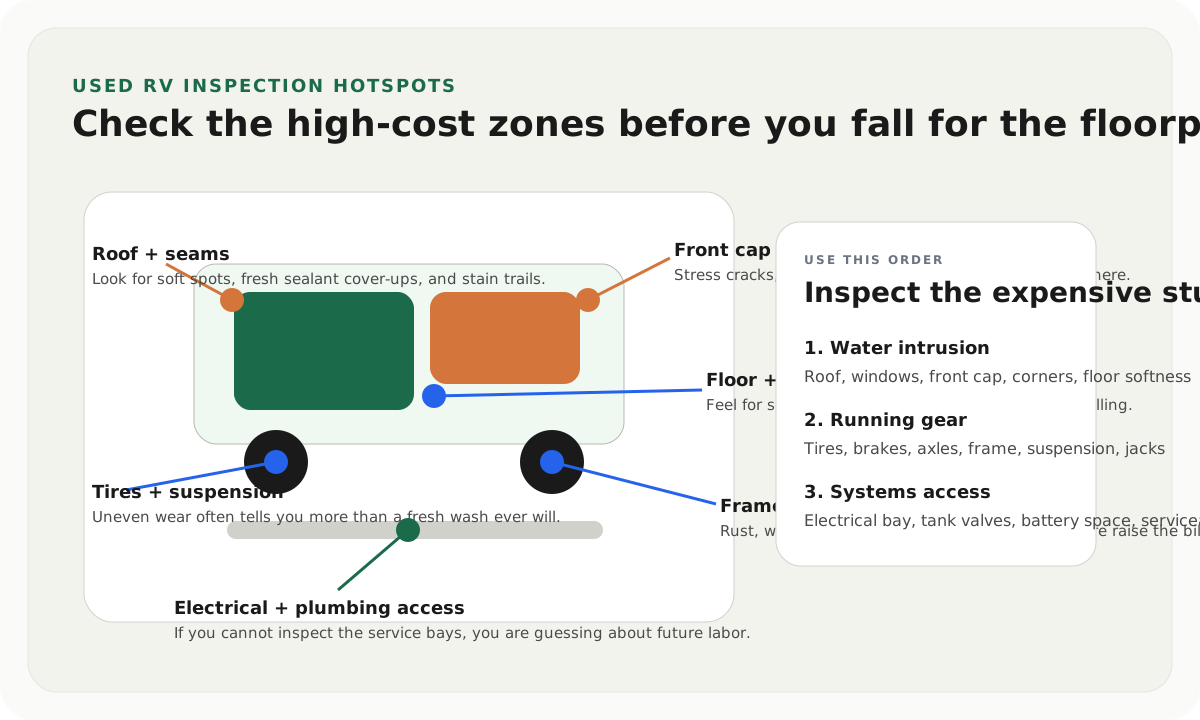
The most useful thing to understand is that the broad membrane field of an RV roof rarely fails on its own — the leaks start at the interruptions. Every roof penetration and edge is a potential entry point: the plumbing and refrigerator vents, the roof fan, the air conditioner, the antenna and any satellite mount, the skylight, the front and rear caps, and the edge trim where the roof meets the walls. Each of those is sealed with lap sealant, and that sealant is the part that ages out. Sun, heat, cold, and flexing cause it to shrink, crack, peel, and pull away over a few years, opening hairline gaps that wick water into the structure below.
This is also why adding accessories to the roof adds maintenance, not just capability. When you mount solar panels, as the solar installation guide covers, every bracket and wire entry becomes another sealed penetration you now have to inspect and maintain for the life of the rig. The lesson is to think of your roof as a collection of sealed joints rather than a single surface: walk it joint by joint, give the most attention to anything that penetrates the membrane, and you will catch the overwhelming majority of leaks at their source long before they reach the wood.
Know your roof type
Knowing what your roof is made of tells you what sealant and care it needs. Most modern RVs use a single-ply rubber membrane — typically EPDM or TPO — bonded over a plywood substructure, while some rigs use fiberglass or, on older units, aluminum. The membranes themselves are durable and can last many years, but they are not all the same, and the sealants and cleaners suitable for one are not always right for another. EPDM and TPO look similar but are different materials, so matching your products to your specific membrane matters, and the membrane maker or your rig's documentation will tell you which you have.
The practical consequence is product compatibility, and it is where people go wrong. Use a lap sealant formulated to bond with your membrane type — Dicor and other roof-care makers publish membrane-specific products precisely because the wrong sealant may not adhere or may damage the roof. A particularly common mistake is reaching for ordinary silicone caulk: silicone tends to bond poorly on RV roofs and, worse, nothing adheres well to cured silicone afterward, which complicates every future repair. Pick the right family of sealant for your roof up front, and your resealing will actually last and stay repairable.
Roof types and sealant at a glance
Compare
Common RV roof materials and what to know about maintaining them
Use one comparison matrix to scan the practical differences. Small screens stack each row; wider screens keep the first column pinned.
| Spec | What it is | Leak weak point | Care note |
|---|---|---|---|
| EPDM rubber membrane | Single-ply rubber over plywood | Sealant at penetrations and seams | Use EPDM-compatible lap sealant and cleaners |
| TPO membrane | Single-ply thermoplastic | Sealant at penetrations and seams | Use TPO-compatible products — not interchangeable with EPDM |
| Fiberglass | Solid molded roof | Edges, caps, and fixtures | Inspect seams and fixtures; can often be coated |
| Aluminum | Older metal roof | Seams, fasteners, and sealant | Watch fastener seams and reseal as needed |
RV roof maintenance at a glance
The facts that keep water out of the structure.
Biggest risk
Water intrusion
The costliest, most hidden RV damage — rot, delamination, soft floors.
Where it leaks
Penetrations & seams
Vents, fans, AC, caps, edges — the lap sealant, not the open membrane.
Inspect
2x a year + storms
Check every seam and penetration, and look inside for water signs.
Reseal with
Compatible sealant
Match your membrane (EPDM/TPO); avoid silicone, which won't stick or re-repair.
How to inspect and reseal
Inspection is mostly a careful, methodical look, done safely. If your roof is rated to be walked on, get up there — distributing your weight and watching your footing — and if it is not, inspect from a ladder at the edges and use the access you have; check your rig's guidance, because not every roof is walkable. Work around the entire perimeter and every penetration, looking for lap sealant that is cracked, peeling, lifting at the edges, discolored, or missing, and scan the membrane for tears, punctures, or thin worn spots. Do this at least twice a year, and again after hail, heavy wind, or scraping a branch, since a single impact can open a seam that was fine the week before.
Resealing a failing spot is straightforward once you have the right product. Clean the area so the new sealant bonds, then apply the correct lap sealant for the surface: self-leveling sealant flows out smoothly on horizontal surfaces like the flat area around a roof vent, while non-sag (non-leveling) sealant stays put on vertical surfaces like the edge caps. Lay it over the cracked or gapped joint to bridge it fully, following the product's directions and cure time. The smart approach is proactive — reseal a joint when it first shows cracking rather than waiting for a drip — and many owners do a complete reseal of all penetrations every few years with spot fixes in between. A protective roof coating can also extend a membrane's UV life, but it does not replace the sealant maintenance.
A worked example: a spring roof check that saved a floor
Picture an early-spring inspection after the rig sat all winter. You get on the walkable roof and work joint by joint, and at the bathroom vent you find the self-leveling lap sealant has cracked and pulled away at one corner; at the front-cap seam there is a hairline split. Then you step inside and notice a faint, tea-colored stain just beginning to form on the ceiling near that same vent — the early interior signature of a leak. Nothing has failed catastrophically yet, but water has clearly started finding its way in, and another season of that would reach the plywood.
So you act: clean both spots on the roof, bridge the cracked vent seal and the cap split with fresh compatible self-leveling sealant, and keep an eye on the ceiling stain to confirm it stops growing. Total cost, a tube of sealant and an hour — and you caught it before the decking under the vent rotted and the ceiling sagged. Skip that inspection, and the same leak quietly destroys the roof structure over a year, turning a trivial reseal into a major repair. That asymmetry is the entire argument for putting roof checks on the calendar twice a year, every year.
The short version
RV roof maintenance is about the sealant, not the membrane: leaks start at the vents, fans, AC, caps, and edges where lap sealant cracks with age and UV, so inspect every seam and penetration at least twice a year and after storms, and reseal any cracked or lifting spot promptly. Match the sealant to your roof membrane — EPDM or TPO — and avoid silicone, which bonds poorly and blocks future repairs. Watch the interior for ceiling stains, soft spots, and musty smells as early leak signs, and treat suspected structural rot or membrane damage as a job for a professional. A little routine attention prevents the hidden water damage that quietly destroys RVs.
How to maintain your RV roof
- Inspect on a schedule. Check every seam and penetration at least twice a year and after any storm or branch strike; climb on only if the roof is rated to be walked on.
- Look for failing sealant. Find lap sealant that is cracked, peeling, lifting, or missing, and scan the membrane for tears, punctures, and worn spots.
- Check inside too. Watch the ceiling and around vents and windows for stains, soft spots, or a musty smell that signal a leak already underway.
- Reseal with the right product. Clean the spot and apply membrane-compatible lap sealant — self-leveling on horizontal surfaces, non-sag on vertical ones — bridging the joint fully.
- Protect and escalate. Consider a UV-protective coating, keep up with new penetrations like solar mounts, and call a pro for membrane damage or suspected structural rot.
Water damage is the costliest thing you can ignore
A small unseen roof leak rots the structure long before you notice, so inspect and reseal proactively rather than waiting for a drip. Use a lap sealant compatible with your roof membrane — not ordinary silicone, which bonds poorly and prevents future repairs — and only walk a roof rated to support you. If you find membrane damage or suspect the decking or walls have rotted, have a qualified RV technician assess it. This is general maintenance guidance, not a substitute for your rig's documentation or a professional inspection.
Official roof-care references
Match products to your membrane and confirm your roof's specifics.
Frequently asked
Questions RVers usually ask next.
How often should you inspect and reseal an RV roof?
Inspect every seam and penetration at least twice a year, and again after storms, hail, or branch strikes. Reseal any cracked, peeling, or lifting lap sealant as soon as you find it rather than waiting for a leak. Many owners also do a full reseal of all penetrations every few years with spot fixes in between.
Where do RV roofs usually leak?
Almost always at penetrations and edges, not the open membrane — the vents, roof fan, air conditioner, antenna, skylight, front and rear caps, edge trim, and any solar or accessory mounts. Those are sealed with lap sealant that cracks and shrinks with age and UV, opening the gaps that let water in.
What sealant should you use on an RV roof?
A lap sealant compatible with your roof's membrane — EPDM and TPO need matching products — using self-leveling sealant on horizontal surfaces and non-sag on vertical ones. Avoid ordinary silicone caulk: it tends to bond poorly on RV roofs, and nothing adheres to cured silicone, which complicates every future repair.
How do you tell if your RV roof is leaking?
From outside, look for cracked, peeling, or missing sealant and any membrane damage. From inside, watch for ceiling stains, soft or spongy spots in the ceiling or walls, a persistent musty smell, or discoloration around vents and windows. Interior signs often mean water has already been getting in for a while, so act promptly.
Can you walk on an RV roof?
Only if your roof is rated to support walking — some are and some are not, so check your rig's documentation first. When a roof is walkable, distribute your weight, watch your footing, and stay near the stronger structural areas. If it is not rated for walking, inspect and reseal from a ladder at the edges and with the access you have.
Freshness note
Last checked June 6, 2026
This topic can change when products, plans, prices, campsite rules, or fit guidance move. These notes show what was reviewed most recently.
This review included
- Confirmed that RV roof leaks typically start at penetrations and seams rather than the membrane field, and that lap sealant must match the membrane type (EPDM/TPO), against Dicor roof-sealant guidance and RV Industry Association material.
- Framed inspection cadence (at least twice a year and after storms) and the self-leveling-versus-non-sag sealant distinction as standard practice, and flagged that silicone is a poor choice on RV roofs.
- Stated that suspected structural rot or membrane damage warrants a professional, and that walkability varies by roof — check before climbing on.
Recent change log
June 6, 2026
Published an RV roof-maintenance guide: why water intrusion is the costliest RV damage, where roofs actually leak, membrane types, inspecting the seams and penetrations, resealing with compatible lap sealant, interior leak signs, and a worked example.
Broader editorial corrections are tracked on the Corrections and Updates page.